Description
Breast Lumps – Not Palpable: Role of Correct Clinical Examination focuses on the challenges of identifying breast lesions that are not detectable on routine palpation. The webinar will emphasize the importance of systematic clinical breast examination techniques and correlating clinical findings with imaging modalities. It will discuss common pitfalls, red flag signs, and situations where a high index of suspicion is required despite a normal physical exam. Practical guidance on clinical decision-making, referrals, and follow-up will be shared. The session aims to strengthen clinicians’ confidence in early detection and appropriate management of non-palpable breast lesions.
Summary Listen
- Clinical suspicion for non-palpable breast lesions should arise from subtle symptoms like bloody or watery nipple discharge (unilateral and spontaneous), persistent nipple itching not resolving with treatment, or transient skin changes. Evaluation should also encompass a thorough clinical examination including all breast quadrants, inframammary crease, and axilla.
- Optimizing detection of subtle abnormalities requires careful history taking, acknowledging the patient's concerns, and thorough examination of all breast quadrants, inframammary crease, and axilla. It's crucial not to dismiss transient or subtle symptoms as benign without proper investigation.
- Common mistakes in clinical breast examination include dismissing patient's concerns, being biased towards "nothing being there," and relying solely on history without keen examination. It is crucial to consider the patient's observation of subtle changes and avoid quick dismissals.
- Clinical examination findings should be correlated with imaging modalities like mammography, ultrasound, and MRI based on age and breast density. Younger patients typically start with ultrasound, while those over 40 may begin with mammography. MRI serves as a second-line investigation. History is paramount in nipple discharge, guiding further investigation even with normal imaging.
- Imaging should be pursued despite normal physical exams when the patient has a high-risk history (family history, past biopsies, or high breast density). Screening should be tailored based on risk factors and not solely on age. Those with ACR density C or D, and significant family history should be screened more frequently.
- Age, breast density, and hormonal status significantly impact the reliability of clinical breast exams. Younger age and higher breast density can obscure small nodules. In such cases, suspicion should be high, and supplementary imaging (ultrasound or MRI) may be needed.
- Red flag features warranting urgent referral to a breast specialist even without a palpable lump include persistent redness, pathological nipple discharge, or transient nipple changes not resolving with treatment. Such symptoms could indicate inflammatory breast carcinoma or other underlying abnormalities.
- In the era of advanced imaging, clinical breast examination remains irreplaceable. It complements imaging but cannot be substituted. Screening programs identify cases requiring further evaluation by specialists. Clinical examination, history, and imaging, when used together, leads to accurate diagnosis.
- To avoid missing early breast pathology, primary care physicians and gynecologists must standardize their examination approach, identify red flags, and ensure mammograms are comprehensive. Incomplete or obscured mammograms should prompt additional imaging, like spot compression views or ultrasounds.
- Careful clinical examination can lead to early detection of non-palpable presentations. Examples include cases of nipple excoriation persisting despite treatment, transient breast redness, or pathological nipple discharge where thorough evaluation and correlation with imaging revealed early-stage cancer.
Sample Certificate

About the Speakers
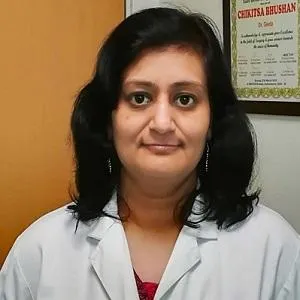
Dr. Neerja Gupta
Visiting Consultant, Surgical Oncology, Apollo Spectra, Narayana Super Speciality Hospital, Delhi
Financial Disclosure
Comments
Comments
You must be logged in to leave a comment.