Description
Join us for an insightful webinar on "AI in Healthcare: Streamlining Clinical & Admin Workflows", where we explore how artificial intelligence is transforming the healthcare landscape. Discover how AI is improving diagnostic accuracy, enhancing patient care, and reducing the administrative burden on healthcare professionals. From automating routine tasks to optimizing patient data management, this session will highlight practical use cases and real-world implementations. Whether you're a clinician, administrator, or healthcare innovator, gain valuable insights into the future of efficient, AI-powered healthcare systems.
Summary Listen
- AI in healthcare is rapidly evolving, moving from compiling data to summarizing it for faster decision-making. It aims to accelerate clinical workflows, allowing medical staff to dedicate more time to patients. The goal is to transform healthcare leadership and patient outcomes by helping middle management adopt AI platforms.
- The healthcare AI market is experiencing significant growth, projected to reach $674.19 billion by 2034. Industry leaders are focusing on AI to improve operations, enhance decision-making, and facilitate personalized patient care. However, a shortage of qualified tech and domain experts is a challenge, favoring third-party solutions for quicker implementation and ROI.
- Generative AI, a subset of AI, provides quick summaries and innovations that accelerate value creation. It prioritizes patient engagement by reducing the burden of documentation on clinicians. Although adoption is at an early stage, various AI models are being used to predict patient care outcomes and improve hospital performance.
- Research opportunities in AI include accelerating clinical trials, exemplified by the rapid development of COVID-19 vaccines. Foundation models such as generative adversarial networks, variational autoencoders, and transformer models are used for image correlation, clinical trait analysis, and documentation automation. AI applications in medical imaging, precision medicine, and clinical NLP are transforming healthcare.
- AI is optimizing clinical workflows through intelligent automation, particularly in clinical documentation using tools like copilot. Ambient listening technology and medical question answering systems are also enhancing efficiency and patient care. Furthermore, drug discovery is being accelerated with AI, with initiatives from institutions like the Cleveland Clinic.
- AI use cases in hospitals, life sciences, and payer spaces are extensive. In hospitals, clinical summarizations, patient screenings, and prior authorizations are key applications. Health insurance organizations are leveraging AI for reviews, authorizations, and claims processing. Future research priorities include establishing validations and benchmarks for AI data usage.
- Private Large Language Models (LLMs) are emerging as a solution to secure patient data. These models are exclusive to organizations, ensuring data privacy and protection of intellectual property. Implementing AI successfully involves thorough preparation, identifying problem areas, defining use cases, and gradually building and scaling the AI solution.
- Agent AI represents the next level of automation, with AI agents independently taking actions without human intervention. It can be used in discharge processes, insurance approvals, and communication with insurance agents. The Agent AI model is poised to revolutionize hospital operations by streamlining administrative tasks.
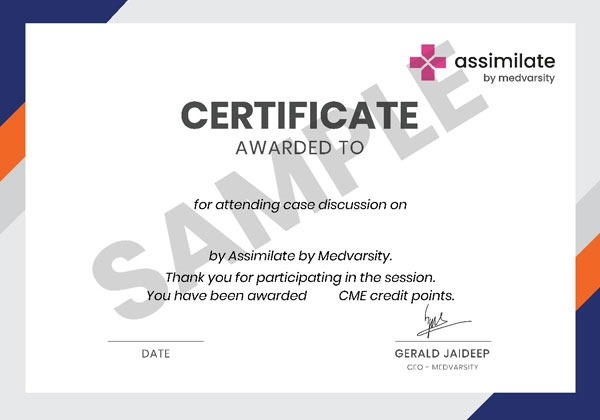
Sample Certificate
About the Speakers

Mr. David Manne
Senior Assistant Vice President in Healthcare & Life Sciences, EXL, Hyderabad
Financial Disclosure
Comments
Comments
You must be logged in to leave a comment.